If you want to see the performance that will likely win the first ever "Android" for best acting (it's my own CineRobot film awards to be called "Androids"!) go see Capote and soak up Philip Seymour Hoffman's unreal capturing of Truman Capote. Hoffman has delivered a lot of terrific performances in films and on stage (I was lucky to see him and John C. Reilly on stage doing True West a few years ago) but this might be the highlight of his career.
Playing Capote is a difficult role to pull off but very early in the film Hoffman just sort of "becomes" Capote and you forget it's acting you are watching. Great, great stuff from a long time favorite. Catherine Keener also gives a standout performance alongside Hoffman and the movie as a whole will be in the running for an Android for best film of the year.
Monday, November 14, 2005


Thursday, November 10, 2005
Jarhead and the changing culture of being a soldier
Jarhead, a military war film that begins like so many other military films, with a stone faced drill instructor screaming insults at a young recruit, never quite makes the leap to being a great movie. Still, it’s an interesting, entertaining, testosterone fueled look at being a marine in the early 1990s and the Gulf War that many might find enjoyable.
Jarhead was a memoir a few years ago by Anthony Swofford about his family connection to the Marines, his boot camp experiences and the dragging on forever experience he had during the Gulf War that soured his opinion of what it was to fight in a war. As a kid growing up, all he wished for was to fight in a war like his grandfather in World War Two and his father in Vietnam. When he was finally in a war, his reaction is one that completely spins him around and changes his opinion.
A beefed up Jake Gyllenhaal plays Swofford as we see him from boot camp, in sniper training and then as he and his unit ship out to the desert to sit and wait to attack Iraq. The troops wait and wait and wait and boredom causes all kinds of festering tension between the men, their relationship with women back home in the states and their opinion of the Marines. Not everyone is feeling so Semper Fi when they’ve sat out in the sun for 3 months tasting sand every single day.
An interesting aspect of the book that the film attempts to explore is the entire male culture of the military in general and the Marines specifically. These men are so pumped up and full of testosterone and have been force fed a steady diet of what it means to be a soldier and to fight for America that it’s almost impossible to satisfy their lust for combat.
Soldiers now are different than any soldier that has ever fought for the United States. First, technology has rendered combat into warfare of distances, of air strikes without close fighting. Marines are constantly sniping about this in the film. They want to “get some” and are angry the jets fly over to bomb the Iraqis before they get the chance to fire their weapons toward an enemy.
The second change for modern soldiers the book and film tries to address is that these young men have been so completely washed in the culture of war through films, video games, books and historic lore that it is virtually impossible for them to stack up against what has come before them. As a Marine, how in the world can you compete with what happened in WW2 when all you are doing is sitting in the desert week after week?
One of the best scenes in the film plays into this notion as the Marines assemble to watch Apocalypse Now as they wait to be shipped of to the Middle East. The Marines, who have obviously watched this film (and others like it) over and over, shout out lines and grin at each other like kids with the hope this will soon be them kicking tail and taking names. These soldiers have built up such expectations about what war is, because of the “culture” of war, it’s impossible for them to live up to the ideals of Full Metal Jacket, Apocalypse Now or The Deer Hunter.
The book explores these ideas in more depth than the film and that’s why I felt the film was missing something as I watched it. I expected director Sam Mendes to put more teeth into the satire aspects of the story. Mendes does put in subtle reminders from time to time that there is another war going on in the desert at the moment and the first Gulf War did little to remedy the restlessness of the region.
The photography is really washed out with sun-drenched vistas of vast desert and it fit the film’s location perfectly. The supporting cast was quite good with Jamie Foxx, Lucas Black and Chris Cooper all giving solid help for Gyllenhaal in the lead.
Jarhead is worth seeing as it’s got some funny dark comedy moments and has some interesting issues regarding the changing culture of war in the testosterone fueled world of the Marines, but it seemed to lack the depth of the book. But you know, the always present complaint of someone who has read the book first lives here—the movie is never as good as the book.
Jarhead was a memoir a few years ago by Anthony Swofford about his family connection to the Marines, his boot camp experiences and the dragging on forever experience he had during the Gulf War that soured his opinion of what it was to fight in a war. As a kid growing up, all he wished for was to fight in a war like his grandfather in World War Two and his father in Vietnam. When he was finally in a war, his reaction is one that completely spins him around and changes his opinion.
A beefed up Jake Gyllenhaal plays Swofford as we see him from boot camp, in sniper training and then as he and his unit ship out to the desert to sit and wait to attack Iraq. The troops wait and wait and wait and boredom causes all kinds of festering tension between the men, their relationship with women back home in the states and their opinion of the Marines. Not everyone is feeling so Semper Fi when they’ve sat out in the sun for 3 months tasting sand every single day.
An interesting aspect of the book that the film attempts to explore is the entire male culture of the military in general and the Marines specifically. These men are so pumped up and full of testosterone and have been force fed a steady diet of what it means to be a soldier and to fight for America that it’s almost impossible to satisfy their lust for combat.
Soldiers now are different than any soldier that has ever fought for the United States. First, technology has rendered combat into warfare of distances, of air strikes without close fighting. Marines are constantly sniping about this in the film. They want to “get some” and are angry the jets fly over to bomb the Iraqis before they get the chance to fire their weapons toward an enemy.
The second change for modern soldiers the book and film tries to address is that these young men have been so completely washed in the culture of war through films, video games, books and historic lore that it is virtually impossible for them to stack up against what has come before them. As a Marine, how in the world can you compete with what happened in WW2 when all you are doing is sitting in the desert week after week?
One of the best scenes in the film plays into this notion as the Marines assemble to watch Apocalypse Now as they wait to be shipped of to the Middle East. The Marines, who have obviously watched this film (and others like it) over and over, shout out lines and grin at each other like kids with the hope this will soon be them kicking tail and taking names. These soldiers have built up such expectations about what war is, because of the “culture” of war, it’s impossible for them to live up to the ideals of Full Metal Jacket, Apocalypse Now or The Deer Hunter.
The book explores these ideas in more depth than the film and that’s why I felt the film was missing something as I watched it. I expected director Sam Mendes to put more teeth into the satire aspects of the story. Mendes does put in subtle reminders from time to time that there is another war going on in the desert at the moment and the first Gulf War did little to remedy the restlessness of the region.
The photography is really washed out with sun-drenched vistas of vast desert and it fit the film’s location perfectly. The supporting cast was quite good with Jamie Foxx, Lucas Black and Chris Cooper all giving solid help for Gyllenhaal in the lead.
Jarhead is worth seeing as it’s got some funny dark comedy moments and has some interesting issues regarding the changing culture of war in the testosterone fueled world of the Marines, but it seemed to lack the depth of the book. But you know, the always present complaint of someone who has read the book first lives here—the movie is never as good as the book.
Wednesday, November 09, 2005
Prime Cut: 1970s american pulp
A few months ago I read about Prime Cut being released on DVD. I’d never heard of the movie but it sounded interesting—Lee Marvin plays an Irish tough guy sent to Kansas City by the Chicago mob to collect $500k from Gene Hackman and some local country types. What I wasn’t expecting as I put the DVD in a couple of nights ago was to love Prime Cut as much as I did.
Prime Cut is just a straight up, charge you like a bull, 1970s attitude, full-on American pulp filmmaking and it is terrific from start to finish. Directed by Michael Ritchie, who helmed one of my all-time favorite movies in The Bad News Bears--so how could I have never heard of this film?
The set locations alone are worth watching Prime Cut for as it’s like a snapshot into the early 1970s with parts of Kansas City you never see—slaughterhouses, dingy flophouses with sacked out winos, swanky downtown hotels that are long gone, rural country fairs and the huge cinema marquees that blink with so many lights they resemble Las Vegas signage.
While Prime Cut exists at its heart as just a gangster film with tough guys (although Marvin dons a pair of white leather shoes that lessons his toughness, or makes him tougher as you have to be a bad-ass to wear shoes like that when beating people up) wanting money they are owed. This is not a normal “give me my money” picture as it turns sleazy, strange, darkly funny, gritty and reeks of the 1970s mentality that made that decade such a blissful decade for filmmaking.
Early in the film Marvin shows up at an auction house to find Hackman (whose name is Mary Ann in this, which should tell you this is a different gangster film) eating a hot plate of cow guts with a bunch of completely naked women laying in drugged stupors in cow pens full of hay. Men stand around the pens and eat sausages and ogle the women in preparation for buying them for all kinds of criminal doings.
One of the naked women is named Poppy and it’s Sissy Spacek’s first credited role in a film. She soon joins up with Marvin’s crew and gets to deliver some odd, spacey ‘70s style dialogue and scenes while Marvin attempts to get the money owed his employer.
Prime Cut also has a great scene with Kansas wheat and a chase sequence involving a giant thresher. The first post I ever did in CineRobot was about wheat so it’s a no-brainer I loved watching this scene. There’s something about wheat blowing in the wind that completely captivates me. I've said it before and I'll say it again: more wheat!
I sometimes wish I had access to a time machine and could use it whenever I wanted. I would hop in it and go back to 1972 and watch Prime Cut at the drive-in because it is the perfect kind of drive-in movie. Prime Cut is an example of pulp American cinema that is trashy and slightly dated, yet is still hard to take your eyes off of and so, so much fun.
Prime Cut is just a straight up, charge you like a bull, 1970s attitude, full-on American pulp filmmaking and it is terrific from start to finish. Directed by Michael Ritchie, who helmed one of my all-time favorite movies in The Bad News Bears--so how could I have never heard of this film?
The set locations alone are worth watching Prime Cut for as it’s like a snapshot into the early 1970s with parts of Kansas City you never see—slaughterhouses, dingy flophouses with sacked out winos, swanky downtown hotels that are long gone, rural country fairs and the huge cinema marquees that blink with so many lights they resemble Las Vegas signage.
While Prime Cut exists at its heart as just a gangster film with tough guys (although Marvin dons a pair of white leather shoes that lessons his toughness, or makes him tougher as you have to be a bad-ass to wear shoes like that when beating people up) wanting money they are owed. This is not a normal “give me my money” picture as it turns sleazy, strange, darkly funny, gritty and reeks of the 1970s mentality that made that decade such a blissful decade for filmmaking.
Early in the film Marvin shows up at an auction house to find Hackman (whose name is Mary Ann in this, which should tell you this is a different gangster film) eating a hot plate of cow guts with a bunch of completely naked women laying in drugged stupors in cow pens full of hay. Men stand around the pens and eat sausages and ogle the women in preparation for buying them for all kinds of criminal doings.
One of the naked women is named Poppy and it’s Sissy Spacek’s first credited role in a film. She soon joins up with Marvin’s crew and gets to deliver some odd, spacey ‘70s style dialogue and scenes while Marvin attempts to get the money owed his employer.
Prime Cut also has a great scene with Kansas wheat and a chase sequence involving a giant thresher. The first post I ever did in CineRobot was about wheat so it’s a no-brainer I loved watching this scene. There’s something about wheat blowing in the wind that completely captivates me. I've said it before and I'll say it again: more wheat!
I sometimes wish I had access to a time machine and could use it whenever I wanted. I would hop in it and go back to 1972 and watch Prime Cut at the drive-in because it is the perfect kind of drive-in movie. Prime Cut is an example of pulp American cinema that is trashy and slightly dated, yet is still hard to take your eyes off of and so, so much fun.
Tuesday, November 08, 2005
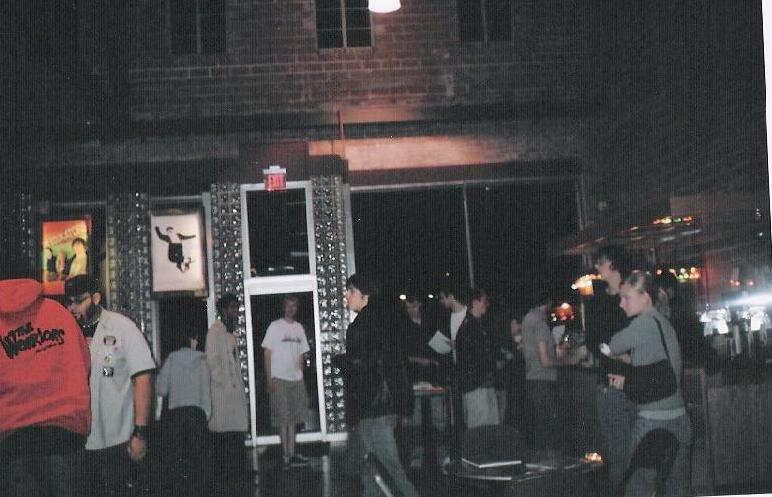
Evil Dead midnight movie photos
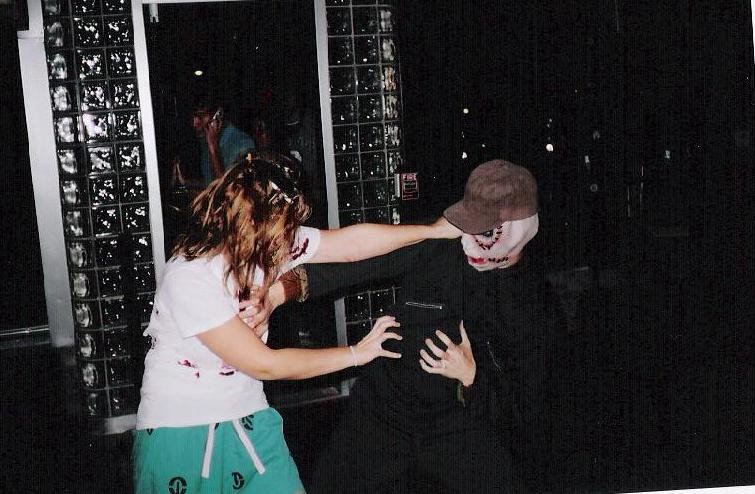
Leatherface shows up at Saturday night screening to attack (or by this photo, grope) victims in the Circle lobby. <10.29.5>

Tuesday, November 01, 2005
The five obstructions
I watched The Five Obstructions a few nights ago and really loved it. This is a fascinating documentary that sees the Danish director (and trickster) Lars von Trier challenge Jorgen Leth to remake his 1967 short film The Perfect Human five different times.
What makes it interesting is each version von Trier comes up with rules or obstructions that will challenge Leth in an attempt to trip him up or make him suffer while making the film.
For example, remake number one has a series of obstructions with one being no cut longer than 12 frames (film exists with 24 frames per second so that’s a lot of very short cuts for the entire film). To see what Leth does with each of these five groups of obstructions is terrific to watch as Leth is inspired by von Trier and makes interesting short after interesting short. Leth comes off as a very talented man after watching what he does with von Trier’s obstructions.
The Five Obstructions deals into subjects such as the deconstruction of film and the recreation of it as something new, different and better—yet still oddly the same almost thirty years after it was originally made.
The Five Obstructions is one of my favorite documentaries of the year and is a must see for anyone who loves seeing the behind the scenes, creative aspects of filmmaking.
What makes it interesting is each version von Trier comes up with rules or obstructions that will challenge Leth in an attempt to trip him up or make him suffer while making the film.
For example, remake number one has a series of obstructions with one being no cut longer than 12 frames (film exists with 24 frames per second so that’s a lot of very short cuts for the entire film). To see what Leth does with each of these five groups of obstructions is terrific to watch as Leth is inspired by von Trier and makes interesting short after interesting short. Leth comes off as a very talented man after watching what he does with von Trier’s obstructions.
The Five Obstructions deals into subjects such as the deconstruction of film and the recreation of it as something new, different and better—yet still oddly the same almost thirty years after it was originally made.
The Five Obstructions is one of my favorite documentaries of the year and is a must see for anyone who loves seeing the behind the scenes, creative aspects of filmmaking.
Friday, October 28, 2005
Elizabethtown--another of worst of 2005
This was a flaming disaster. Has writer/director Cameron Crowe drank some kind of dangerous elixir that is causing him to make completely awful and shite movies all of a sudden?
Vanilla Sky was horrible from start to finish and now Crowe delivers Elizabethtown, which is even worse. I guess with Crowe and company I expect the film to be much, much better than what I witnessed, but after these two recent duds, maybe I should rethink that?
Elizabethtown isn’t funny, it’s not emotionally engaging, not a single character has any depth—it’s basically one of the most artificial and phony films I’ve sat through in a long while.
A big problem is the male lead, Orlando Bloom. The man is an awful actor. I don’t care how pretty he is or how he can make the cheeks blush when you look at him—the man has absolutely no screen chemistry as a leading man. After seeing Kingdom of Heaven earlier in the year and now Elizabethtown I’m convinced that Bloom will only do a movie no harm if he is in “elfin” mode ala Lord of the Rings. The funniest scene in the entire movie is when Bloom attempts to cry. Now that was comedy!
Crowe’s script is a hodgepodge of story directions—does he know what kind of story he wants to tell here? There is way too much bland narration from Bloom that comes of as smug and adds nothing to the film (as most narration does—it’s lazy screenwriting the vast majority of the time). The film is too long as well but that goes into the nest that Crowe was unsure what kind of story he wanted to tell.
And let me address the use of music in the film. Crowe pumps Elizabethtown full of so many musical background moments it’s as if he can only reveal his characters by finding some obscure/classic song from his or his wife Nancy Wilson’s record collection. Jeez, man, if you want to make videos go make videos, I was hoping to watch a movie here.
I’m not even going into Kirsten Dunst and the "there one sentence, gone the next" Kentucky accent of hers. Why even try to do a Southern accent, any accent, if you aren’t going to stick with it for the FULL movie? Plus, the completely ridiculous scene with Susan Sarandon at a funeral eulogy. I mean, tap dancing for God’s sake?! I think Crowe has lost his mind with that bit of nonsense.
I did like seeing Tulsan Gailard Sartain, the Round Barn in Arcadia, Oklahoma and My Morning Jacket showing up as “Ruckus” to do “Freebird” at the earlier mentioned memorial service. But that’s not enough to save this disaster of a film.
Elizabethtown might be the worst film of the year, considering the people involved, its high profile release and the amount of sheer train wreck quality it maintains throughout.
Vanilla Sky was horrible from start to finish and now Crowe delivers Elizabethtown, which is even worse. I guess with Crowe and company I expect the film to be much, much better than what I witnessed, but after these two recent duds, maybe I should rethink that?
Elizabethtown isn’t funny, it’s not emotionally engaging, not a single character has any depth—it’s basically one of the most artificial and phony films I’ve sat through in a long while.
A big problem is the male lead, Orlando Bloom. The man is an awful actor. I don’t care how pretty he is or how he can make the cheeks blush when you look at him—the man has absolutely no screen chemistry as a leading man. After seeing Kingdom of Heaven earlier in the year and now Elizabethtown I’m convinced that Bloom will only do a movie no harm if he is in “elfin” mode ala Lord of the Rings. The funniest scene in the entire movie is when Bloom attempts to cry. Now that was comedy!
Crowe’s script is a hodgepodge of story directions—does he know what kind of story he wants to tell here? There is way too much bland narration from Bloom that comes of as smug and adds nothing to the film (as most narration does—it’s lazy screenwriting the vast majority of the time). The film is too long as well but that goes into the nest that Crowe was unsure what kind of story he wanted to tell.
And let me address the use of music in the film. Crowe pumps Elizabethtown full of so many musical background moments it’s as if he can only reveal his characters by finding some obscure/classic song from his or his wife Nancy Wilson’s record collection. Jeez, man, if you want to make videos go make videos, I was hoping to watch a movie here.
I’m not even going into Kirsten Dunst and the "there one sentence, gone the next" Kentucky accent of hers. Why even try to do a Southern accent, any accent, if you aren’t going to stick with it for the FULL movie? Plus, the completely ridiculous scene with Susan Sarandon at a funeral eulogy. I mean, tap dancing for God’s sake?! I think Crowe has lost his mind with that bit of nonsense.
I did like seeing Tulsan Gailard Sartain, the Round Barn in Arcadia, Oklahoma and My Morning Jacket showing up as “Ruckus” to do “Freebird” at the earlier mentioned memorial service. But that’s not enough to save this disaster of a film.
Elizabethtown might be the worst film of the year, considering the people involved, its high profile release and the amount of sheer train wreck quality it maintains throughout.
Thursday, October 27, 2005
Flightplan--possible worst of 2005
So this is what Jodie Foster has become? Foster, the Academy Award winner, who was once thought of as one of the best actresses working in Hollywood, is now officially making movies for C-A-S-H-O-L-A.
Maybe she had dinner with Robert De Niro as he’s completely gone the same route with sludge like the woeful Hide and Seek. It’s a sad day when De Niro gives one of his best recent performances on a bleeping American Express commercial!
It’s not that Flightplan is poorly made technically or just flat out bad, it’s just dull, uninteresting and lifeless. Often that’s the biggest sin and timewaster of all a movie can have.
With Flightplan’s predictability and the absurd twists that are pure screenwriter 101 invention, Foster has fallen to unseen depths. I’m sure there is a willing sponsor to see her act in a commercial extolling the virtues of beer, credit cards or financial investment that she can fall back on. Mr. De Niro’s agent has those numbers for you Jodie whenever you are ready for them.
Maybe she had dinner with Robert De Niro as he’s completely gone the same route with sludge like the woeful Hide and Seek. It’s a sad day when De Niro gives one of his best recent performances on a bleeping American Express commercial!
It’s not that Flightplan is poorly made technically or just flat out bad, it’s just dull, uninteresting and lifeless. Often that’s the biggest sin and timewaster of all a movie can have.
With Flightplan’s predictability and the absurd twists that are pure screenwriter 101 invention, Foster has fallen to unseen depths. I’m sure there is a willing sponsor to see her act in a commercial extolling the virtues of beer, credit cards or financial investment that she can fall back on. Mr. De Niro’s agent has those numbers for you Jodie whenever you are ready for them.
Wednesday, October 26, 2005
Originals better despite age
Screened a sometime scratchy print of Alien at Circle Cinema for the midnight series and I really enjoyed it after having not seeing it in well over a decade. On Friday night, a young woman who works there came out after 20 minutes saying it looked “too ‘80s” for her taste.
The next night I watched it and loved the colorful, yet low-tech view of the future as conceived by Ridley Scott in 1979. The movie is a claustrophobic, tense journey into the unknown that combines horror and psychological thriller in ways often duplicated since.
I’ve heard this kind of complaint a lot from younger people and classic older horror/thriller films. They will claim the recent Texas Chainsaw Massacre was awesome but the deranged 1974 version was boring or unprofessional. During the re-release of The Exorcist a few years ago teenagers were laughing during certain scenes, yet, I hear their peers say how scared the middling knock off The Exorcism of Emily Rose made them as we exit the theatre. When I hear these kinds of statements, I just want to shake some common sense and taste into the lot of them!
What makes Alien better than Alien Resurrection or Halloween better than Halloween 9 (the list goes on and on) is that the early films have an originality in story, attitude and execution that the following sequels can’t even sniff, despite the new ones having all the advantages of komputers to aid their graphics.
It’s not all about graphics and high-powered komputers young movie watchers.
The early films have a subtlety and nuance to them that the remakes/sequels do not. The later films tend to go the blunt, in your face route as they feel they have to be so “full on” they have to top the originals. This doesn’t make them better movies; it just makes them noisier.
The early “classic” films often realize it’s the quiet moments that are the most terrifying. It’s in these quiet moments during Alien when “Ripley” is battling these alien beings alone in some empty part of a deep, black, silent space, when we let our imagination take over. The imagination is more terrifying than any amount of noisy, komputer generated effect can ever dream of producing.
So, as I sat in the tiny, darkened Circle Cinema and watched the low-budget effects/set design I found comfort, tension and fear in its well-aged flicker from the projector.
The next night I watched it and loved the colorful, yet low-tech view of the future as conceived by Ridley Scott in 1979. The movie is a claustrophobic, tense journey into the unknown that combines horror and psychological thriller in ways often duplicated since.
I’ve heard this kind of complaint a lot from younger people and classic older horror/thriller films. They will claim the recent Texas Chainsaw Massacre was awesome but the deranged 1974 version was boring or unprofessional. During the re-release of The Exorcist a few years ago teenagers were laughing during certain scenes, yet, I hear their peers say how scared the middling knock off The Exorcism of Emily Rose made them as we exit the theatre. When I hear these kinds of statements, I just want to shake some common sense and taste into the lot of them!
What makes Alien better than Alien Resurrection or Halloween better than Halloween 9 (the list goes on and on) is that the early films have an originality in story, attitude and execution that the following sequels can’t even sniff, despite the new ones having all the advantages of komputers to aid their graphics.
It’s not all about graphics and high-powered komputers young movie watchers.
The early films have a subtlety and nuance to them that the remakes/sequels do not. The later films tend to go the blunt, in your face route as they feel they have to be so “full on” they have to top the originals. This doesn’t make them better movies; it just makes them noisier.
The early “classic” films often realize it’s the quiet moments that are the most terrifying. It’s in these quiet moments during Alien when “Ripley” is battling these alien beings alone in some empty part of a deep, black, silent space, when we let our imagination take over. The imagination is more terrifying than any amount of noisy, komputer generated effect can ever dream of producing.
So, as I sat in the tiny, darkened Circle Cinema and watched the low-budget effects/set design I found comfort, tension and fear in its well-aged flicker from the projector.
Saturday, October 15, 2005
Slow-motion overdose
I finally got to see 2046. Watching a Wong Kar Wai movie, 2046 particularly, is kind of like visiting a foreign country where you do not speak the language. There is a period of adjustment to become settled in while in this place--watching 2046 is the exact same thing. The first 30 minutes were a mess as I was trying to get my bearings in the story as it flew all over the place. After that, I settled in and the images started to cascade to the screen and 2046 became enjoyable.
2046 is loosely connected with In the Mood For Love (loosely is appropriate as you do not have to see the first one to watch 2046). The story really isn't a story--driving narrative force is not a strength of Wong Kar Wai--as we see a man and his loves in 1968 Hong Kong. The man also exists as an alter-ego and character in a pulp novel in the future while riding a superfuturistc train filled with beautiful "love" androids. I liked the sci-fi aspect of the film and wish it would have had more of that in there rather than the 1968 stuff. The light train just looked flat out cool.
People walked out of 2046 left and right as I guess it's not for everyone with its aimlessness and jumping around. I never thought I'd say this about a Wong movie but he used slow motion too much! Like always, incredible cinematography by Christopher Doyle and others. Loved seeing Faye Wong in something again as I have a big crush on her.
While I don't like this as much as In the Mood For Love, 2046 is still an interesting, puzzling, hyper-romantic, slow-motion drenched tale that leaves a lot to the viewer to decipher.
2046 is loosely connected with In the Mood For Love (loosely is appropriate as you do not have to see the first one to watch 2046). The story really isn't a story--driving narrative force is not a strength of Wong Kar Wai--as we see a man and his loves in 1968 Hong Kong. The man also exists as an alter-ego and character in a pulp novel in the future while riding a superfuturistc train filled with beautiful "love" androids. I liked the sci-fi aspect of the film and wish it would have had more of that in there rather than the 1968 stuff. The light train just looked flat out cool.
People walked out of 2046 left and right as I guess it's not for everyone with its aimlessness and jumping around. I never thought I'd say this about a Wong movie but he used slow motion too much! Like always, incredible cinematography by Christopher Doyle and others. Loved seeing Faye Wong in something again as I have a big crush on her.
While I don't like this as much as In the Mood For Love, 2046 is still an interesting, puzzling, hyper-romantic, slow-motion drenched tale that leaves a lot to the viewer to decipher.
Friday, October 07, 2005
Serenity
Serenity is a movie that should never have been made. In 2002 it was a doomed television show called Firefly that was allowed to make only 12 episodes before getting the axe. Never mind it had a rabid following, critics loved it, or Joss Whedon, the man behind the popular shows Buffy the Vampire Slayer and Angel, created it.
In a way, Serenity is a landmark kind of movie because fans of Firefly were so fanatical about the show—they wanted justice. They wanted the story to continue whether on another channel or the big screen. They called themselves “Brownshirts” and immobilized themselves on the Internet. Three years later Serenity arrives in theatres everywhere. Can it please the already on board Brownshirts and new people as well? The answer is a resounding yes.
I was a fan of Firefly but had my doubts regarding the movie. I was worried it was going to be a rehashing of the series plot just ramped up to “movie” size for people who hadn’t seen the show. Early on in the film, these concerns were gone and I got to just enjoy the story and the characters I wasn’t expecting to see again.
Have you ever heard someone say, “Well, that’s kind of a space western” or something similar? Serenity is that space western. Even though it’s set hundreds of years in the future—this is a western. Serenity has that same pluck and spirit of westerns of yore and use slang, speech mannerisms, technology and weapons that have a direct connection to the old west.
The story concerns a rag-tag group of individuals who scrape along by doing petty robbery and illegal freight running to isolated outposts at the edge of a planetary system’s frontier. Their ship (named Serenity after a defeat in a war that several of the crew were involved in and are still haunted by) is a bit dodgy and rundown. Their survival depends on the success of their next job—legal or otherwise.
They bring along passengers from time to time and they happen to have a doozy with them in a young, damaged girl named River. River can read minds. River is also a killing machine who the ruling planetary government wants to get rid of. A ruthless assassin is dispatched to slaughter the crew and anyone who stands in the way of getting to River.
That’s the gist of the story but Serenity is so much more. Serenity deserves to be seen. It’s leap years better than the over-hyped mess that has become of the Star Wars franchise and other middle of the road science fiction releases.
Serenity is interesting, funny, smart, surprising and exciting science fiction and should please anyone whether you want lots of action and space explosions or if you want great characters. It’s just a great story that was a great television show and now it’s a great movie. Thanks Brownshirts, I owe you one for letting us see more of the crew of the Serenity.
In a way, Serenity is a landmark kind of movie because fans of Firefly were so fanatical about the show—they wanted justice. They wanted the story to continue whether on another channel or the big screen. They called themselves “Brownshirts” and immobilized themselves on the Internet. Three years later Serenity arrives in theatres everywhere. Can it please the already on board Brownshirts and new people as well? The answer is a resounding yes.
I was a fan of Firefly but had my doubts regarding the movie. I was worried it was going to be a rehashing of the series plot just ramped up to “movie” size for people who hadn’t seen the show. Early on in the film, these concerns were gone and I got to just enjoy the story and the characters I wasn’t expecting to see again.
Have you ever heard someone say, “Well, that’s kind of a space western” or something similar? Serenity is that space western. Even though it’s set hundreds of years in the future—this is a western. Serenity has that same pluck and spirit of westerns of yore and use slang, speech mannerisms, technology and weapons that have a direct connection to the old west.
The story concerns a rag-tag group of individuals who scrape along by doing petty robbery and illegal freight running to isolated outposts at the edge of a planetary system’s frontier. Their ship (named Serenity after a defeat in a war that several of the crew were involved in and are still haunted by) is a bit dodgy and rundown. Their survival depends on the success of their next job—legal or otherwise.
They bring along passengers from time to time and they happen to have a doozy with them in a young, damaged girl named River. River can read minds. River is also a killing machine who the ruling planetary government wants to get rid of. A ruthless assassin is dispatched to slaughter the crew and anyone who stands in the way of getting to River.
That’s the gist of the story but Serenity is so much more. Serenity deserves to be seen. It’s leap years better than the over-hyped mess that has become of the Star Wars franchise and other middle of the road science fiction releases.
Serenity is interesting, funny, smart, surprising and exciting science fiction and should please anyone whether you want lots of action and space explosions or if you want great characters. It’s just a great story that was a great television show and now it’s a great movie. Thanks Brownshirts, I owe you one for letting us see more of the crew of the Serenity.
Thursday, September 29, 2005
Bob Moog 1934-2005
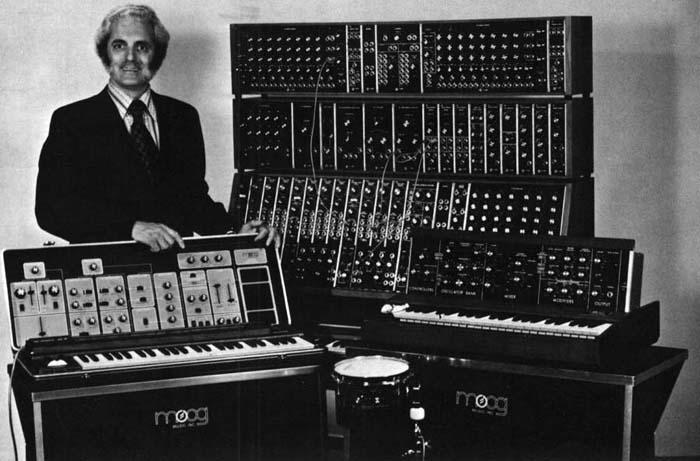
(A few weeks ago Robert Moog passed away. Being a huge fan of synethesizers you can
not avoid Moog's impact on what could be done with electronic instrumentation. He had
more influence than anyone else and his Moog synths happen to be the end all, be all
for me and many other electronic music fans. I wrote this piece earlier in the year when
the documentary Moog came out and wanted to post it here on Cinerobot. Enjoy and
long live the Moog synthesizer!)

I'll admit it: I'm in love with a machine. It's a love affair that has lasted over twenty years
and began one early teenage day when I watched a group of men from England stand
behind a bank of synthesizers. They pressed keys. They twiddled knobs. Waves of
electric sound erupted from their machines. I was awestruck.

The man who did more than anyone else to give birth to the modern analogue synthesizer,
Robert Moog, is the subject of a documentary recently released on DVD. Moog (pronounced
like rogue) began making modular synthesizers (he coined the phrase, meaning a synthesis
of previous ideas into one instrument) in 1964, but these early synths were huge systems,
that due to expense, few people could afford. This changed with the introduction of the minimoog
in the late 1960s and early 1970s. The minimoog, and its variations, helped usher in modern
electronic music as young musicians were able to afford the smaller, more mobile synths.
Soon, artists such as Keith Emerson and Rick Wakeman were performing extended prog-rock
solos while German band Kraftwerk were showing what analogue synthesizers could do in a more
traditional pop song format.

When I hear good electronic music created with analogue synthesizers I think I am hearing
music from the future. To see a person standing in front of a machine that takes up half a
wall, cables and wires plugged in everywhere, notes surging from the keys--this is an
exhilarating thing for me. It is the sound of the future, of science fiction and of the unknown.
Robert Moog is the mad scientist creator of the possibility of such a sound, and to paraphrase
Moog at one point in "Moog", to play a Moog synth is like being a current of electricity inside
a machine. It's that idea that makes analogue synthesizers so fantastic. When you play one
you are not playing a string, drum or traditional instrument--you are playing electricity. What
is more futuristic than that?

It is that futuristic element that people thought was so frightening when the Moog synth first
came into being. Moog states in the documentary that traditional minded musicians and the
general public thought of the synths as "harmful" and possibly ruinous to the future of music.
It took until the late 1970s with bands emerging from the punk rock aftermath to spread the
synthesizer sound to a more mainstream, youth friendly pop market. In England bands such
as Fad Gadget, Human League, Depeche Mode, Gary Numan (the huge sweeping notes on
"Cars" are from Moog synths), Orchestral Maneuvers In the Dark and John Foxx, as well as
 the Japanese band Yellow Magic Orchestra were at the forefront of a new electronic music.
Current bands such as Toronto's Solvent and England's Ladytron are examples of the usage
of the instruments in the 21st century. Virtually every dance band on the planet uses it in
some shape or form to create its grooves. The analogue synthesizer is such a key instrument
now it will never disappear and hopefully will retain its futuristic quality.

The documentary is a short (72 minutes), bare bones affair that comprises interviews with Moog
(who often does not look comfortable on camera), old footage of the early days of his work,
interviews with other people who love the instrument and live footage of bands playing various
Moog synths (Stereolab, Money Mark and Mix Master Mike, Keith Emerson, Rick Wakeman
among others). I loved that there were theremin bits (an instrument played with the magnetic
fields of electricity--you literally play air when playing a theremin, think "Good Vibrations" by the
Beach Boys) in the film. I personally would have loved more old footage and live performances
to at least push the running time up to 90 minutes but am just happy to see anything about Bob
Moog and his groundbreaking Moog synthesizer. When you are in a lifelong love affair, like I am,
any amount of time will make your heart happy. If you see this, maybe you'll too fall in love.
Wednesday, September 28, 2005
The trouble with free screenings
Last night I happened to be at one of these promotional screenings that are populated with people who are there for one reason: free movie! When the film is some brainless popcorn blockbuster this is fine with me as I don't need to pay much attention to write a 500 word review and don’t become bothered by the chatter and noise that will come from the audience.
But last night I was trying to watch the new David Cronenberg movie, “A History of Violence”, with a packed theatre and it was rough going (I should have known there would be issues when I saw that the crowd was culled from the listeners of a local sports station known as the “Sports Buzz” and an urban top 40 station called “Powr95”). Brutish, loud behavior erupted continuously from the emotionally stunted and just rude people who were there because it was free.
For example, there is kind of a heated sex scene between Viggo Mortensen and Maria Bello that involves oral sex in a more ramped up way than is normally seen in American films. Giggling and cackling erupted all over the theatre like the audience was nothing but hormone drenched junior high boys. It was embarrassing. I was embarrassed for these people. One guy sitting next to me kind of moans out loud during the scene while saying to anyone within earshot, “That’s what I’m talking about right there.” Thanks for sharing you moron.
Bello later does a brief full frontal nude scene and you would have thought the first lady Laura Bush was baring her pasty, robot-ass pubes up there the way people gasped and guffawed.
And people act surprised when Americans are accused of backward, prudish thoughts regarding sexuality? Come watch a free movie in Tulsa with adult themes with (gasp!) naked people and those stereotypes will hit you full on in the face.
Even the violence in the story drew protests and shock from the people around me. This was a David Cronenberg movie people! But, as I said, the audience was here because it was free, not because the film is getting seriously good reviews or because of Cronenberg’s previous films. The shame is I was there as an avid film lover and an adult who can handle adult themes. Unfortunately, these repressed yahoos couldn’t.
I was at another free press/public screening a few months ago for a film called Me and You and Everyone We Know. I loved this movie but it is not for everyone, as it is a hyper-quirky meditation on love and how people connect or disconnect from one another in the 21st century world.
Well, an aspect of the film involves children and sexuality—a taboo subject if there ever was one. I counted six walk outs during one scene in particular.
I felt kind of sorry for those people leaving. I can see them muttering to each other during the film: “I don’t care if this is free, what in the hell is this junk? Some 8 year old talking about poo in and out of butts forever and people pay for this garbage? Let’s get the hell out of here and go watch Flightplan, now that’s some real moviemaking!”
Do people ever look and see what movie it is they are getting free passes to? My experience says no, they just show up and expect the formulaic dreck that usually comes down the road. When they come face to face with something odd or surprising, they turn away, get up and leave or sit and giggle like teenagers.
Here’s hoping that next time I’m at one of these screenings every single person will get up and leave the theatre who is shocked, freaked out, disturbed, offended, sickened by what they see. If I’m the only person left in the darkened theatre after they’ve left in a huffing-mad horde, that would be fine and dandy by me.
But last night I was trying to watch the new David Cronenberg movie, “A History of Violence”, with a packed theatre and it was rough going (I should have known there would be issues when I saw that the crowd was culled from the listeners of a local sports station known as the “Sports Buzz” and an urban top 40 station called “Powr95”). Brutish, loud behavior erupted continuously from the emotionally stunted and just rude people who were there because it was free.
For example, there is kind of a heated sex scene between Viggo Mortensen and Maria Bello that involves oral sex in a more ramped up way than is normally seen in American films. Giggling and cackling erupted all over the theatre like the audience was nothing but hormone drenched junior high boys. It was embarrassing. I was embarrassed for these people. One guy sitting next to me kind of moans out loud during the scene while saying to anyone within earshot, “That’s what I’m talking about right there.” Thanks for sharing you moron.
Bello later does a brief full frontal nude scene and you would have thought the first lady Laura Bush was baring her pasty, robot-ass pubes up there the way people gasped and guffawed.
And people act surprised when Americans are accused of backward, prudish thoughts regarding sexuality? Come watch a free movie in Tulsa with adult themes with (gasp!) naked people and those stereotypes will hit you full on in the face.
Even the violence in the story drew protests and shock from the people around me. This was a David Cronenberg movie people! But, as I said, the audience was here because it was free, not because the film is getting seriously good reviews or because of Cronenberg’s previous films. The shame is I was there as an avid film lover and an adult who can handle adult themes. Unfortunately, these repressed yahoos couldn’t.
I was at another free press/public screening a few months ago for a film called Me and You and Everyone We Know. I loved this movie but it is not for everyone, as it is a hyper-quirky meditation on love and how people connect or disconnect from one another in the 21st century world.
Well, an aspect of the film involves children and sexuality—a taboo subject if there ever was one. I counted six walk outs during one scene in particular.
I felt kind of sorry for those people leaving. I can see them muttering to each other during the film: “I don’t care if this is free, what in the hell is this junk? Some 8 year old talking about poo in and out of butts forever and people pay for this garbage? Let’s get the hell out of here and go watch Flightplan, now that’s some real moviemaking!”
Do people ever look and see what movie it is they are getting free passes to? My experience says no, they just show up and expect the formulaic dreck that usually comes down the road. When they come face to face with something odd or surprising, they turn away, get up and leave or sit and giggle like teenagers.
Here’s hoping that next time I’m at one of these screenings every single person will get up and leave the theatre who is shocked, freaked out, disturbed, offended, sickened by what they see. If I’m the only person left in the darkened theatre after they’ve left in a huffing-mad horde, that would be fine and dandy by me.
Tuesday, September 27, 2005
Lord of war = lord of crap
There’s always a multitude of reasons why a big Hollywood movie fails to draw a crowd and is labeled a bust. Some of the more popular ones include horrible marketing, wrong choices regarding release dates with too much competition or an uninterested, apathetic viewing public. My personal favorite and the reason I think Lord of War has tanked in box office return—the film is terrible.
No one involved in any movie before it is released is thinking the film is going to be a disaster. They are dreaming of the moolah that will be flowing into their bank accounts. Embarrassing acting or clichéd and poorly written scripts never enter into it until it’s too late and negative reviews pour in while theatre seats remain empty.
Lord of War has a combination of bad elements—acting, story and writing—that make it one of the least enjoyable bits of cinema I watch the entire year. Worse films may come my way, but on just enjoyment factor, Lord of War is just wretched from its smug beginning to its smug ending.
Nic Cage stars as Yuri Orlov, a dissatisfied Ukranian-American living in Brooklyn. One day he’s hit with an epiphany after watching local Russian gangsters carry out a hit in a restaurant. Days later he’s somehow scored an Uzi and is selling it in some low-rent hotel.
Soon after he’s running guns in other countries and we never see how he engineered these connections. Who knows, maybe in Brooklyn in the 1980s you could just spread the word that you are ready to run some guns and poof, machine guns and grenade dealers just show up at your stoop. Lord of War was in such a hurry to get ahead in the story it couldn’t fabricate a plausible back-story and this makes Yuri’s rise to riches/power completely ridiculous.
Lord of War attempts to be a revealing satire so we see messages hammered into us like “guns are bad” and “governments are corrupt” and “guns used by governments kill people” (oh wait, I used that one already). I’m not opposed to films with this message on an international, or local, level but when they are delivered in such a forceful, humorless, soulless way all I feel is revulsion.
What makes this even worse is it uses this “smugger than thou” narration by Cage that attempts to explain the motivations of Orlov and how to run guns to foreign dictators. The narration is often played for laughs with lame quips about Bin Laden and weaponry but it falls flat the entire movie. At times there was more narration than dialogue in the film and it just did not work.
Nicolas Cage is awful in Lord of War. He delivers a performance that is so distracted and bored I am curious why he even agreed to do the film (cash money baby!). His speech is spoken with teeth clinched tightly so often I wonder if he had some kind of dental issue going on while this was filmed. I won’t even bring up his toupee as that might be hitting below the belt. You’d think with a budget of millions that a better toupee wrangler could be found wouldn’t you?
I don’t know what has happened to writer/director Andrew Niccol. The first two films he wrote or directed were The Truman Show and Gattaca—two great, interesting movies. Since then it’s Simone and Lord of War—two horrible movies. Who knows what his next one will be like but I’m losing interest in a hurry after watching Lord of War.
Lord of War is a heavy-handed, soulless, vile satire that fails on nearly every level—writing, acting and story—that is an unpleasant thing to have to sit through.
No one involved in any movie before it is released is thinking the film is going to be a disaster. They are dreaming of the moolah that will be flowing into their bank accounts. Embarrassing acting or clichéd and poorly written scripts never enter into it until it’s too late and negative reviews pour in while theatre seats remain empty.
Lord of War has a combination of bad elements—acting, story and writing—that make it one of the least enjoyable bits of cinema I watch the entire year. Worse films may come my way, but on just enjoyment factor, Lord of War is just wretched from its smug beginning to its smug ending.
Nic Cage stars as Yuri Orlov, a dissatisfied Ukranian-American living in Brooklyn. One day he’s hit with an epiphany after watching local Russian gangsters carry out a hit in a restaurant. Days later he’s somehow scored an Uzi and is selling it in some low-rent hotel.
Soon after he’s running guns in other countries and we never see how he engineered these connections. Who knows, maybe in Brooklyn in the 1980s you could just spread the word that you are ready to run some guns and poof, machine guns and grenade dealers just show up at your stoop. Lord of War was in such a hurry to get ahead in the story it couldn’t fabricate a plausible back-story and this makes Yuri’s rise to riches/power completely ridiculous.
Lord of War attempts to be a revealing satire so we see messages hammered into us like “guns are bad” and “governments are corrupt” and “guns used by governments kill people” (oh wait, I used that one already). I’m not opposed to films with this message on an international, or local, level but when they are delivered in such a forceful, humorless, soulless way all I feel is revulsion.
What makes this even worse is it uses this “smugger than thou” narration by Cage that attempts to explain the motivations of Orlov and how to run guns to foreign dictators. The narration is often played for laughs with lame quips about Bin Laden and weaponry but it falls flat the entire movie. At times there was more narration than dialogue in the film and it just did not work.
Nicolas Cage is awful in Lord of War. He delivers a performance that is so distracted and bored I am curious why he even agreed to do the film (cash money baby!). His speech is spoken with teeth clinched tightly so often I wonder if he had some kind of dental issue going on while this was filmed. I won’t even bring up his toupee as that might be hitting below the belt. You’d think with a budget of millions that a better toupee wrangler could be found wouldn’t you?
I don’t know what has happened to writer/director Andrew Niccol. The first two films he wrote or directed were The Truman Show and Gattaca—two great, interesting movies. Since then it’s Simone and Lord of War—two horrible movies. Who knows what his next one will be like but I’m losing interest in a hurry after watching Lord of War.
Lord of War is a heavy-handed, soulless, vile satire that fails on nearly every level—writing, acting and story—that is an unpleasant thing to have to sit through.
Wednesday, September 21, 2005
My kind of science-fiction
To put it simply, Code 46 is my kind of science fiction. Directed by Michael Winterbottom and starring Tim Robbins and Samantha Morton, it’s sci-fi that puts ideas over CGI bombast that tells a romantic story set in a future of restrictive laws and extremely controlled genetic manipulation.
Code 46 is atmospheric as all get out and is a bit on the slow side (something I enjoy) as the story itself isn’t all that gripping—the film is more nuance than thrilling adventure. I don’t mind that, as I like seeing the future portrayed in realistic ways without shootouts with high-tech weaponry.
The film shows the future as it might be in our lifetime—society is rigidly controlled; people either live in cities of neon and glass or are shunted into empty desert wastelands; DNA is monitored so completely that who you sleep with, marry or have kids with is administered by government law; people take a “virus” to know a language, become psychics or learn something; languages have become global with people using English, Spanish, Arabic and Chinese as they speak; it’s a future of architecture and design that varies wildly between those who have and those that do not.
Despite some clunky narration from Morton, Code 46 is an interesting reality-based future that we might see in our lifetimes. Forget flying cars or jetting off to Mars or that kind of sci-fi, this is sci-fi that is attainable, as it’s much like the world we live in, only buried in the technological future that we careen toward as a culture and planet.
Code 46 is atmospheric as all get out and is a bit on the slow side (something I enjoy) as the story itself isn’t all that gripping—the film is more nuance than thrilling adventure. I don’t mind that, as I like seeing the future portrayed in realistic ways without shootouts with high-tech weaponry.
The film shows the future as it might be in our lifetime—society is rigidly controlled; people either live in cities of neon and glass or are shunted into empty desert wastelands; DNA is monitored so completely that who you sleep with, marry or have kids with is administered by government law; people take a “virus” to know a language, become psychics or learn something; languages have become global with people using English, Spanish, Arabic and Chinese as they speak; it’s a future of architecture and design that varies wildly between those who have and those that do not.
Despite some clunky narration from Morton, Code 46 is an interesting reality-based future that we might see in our lifetimes. Forget flying cars or jetting off to Mars or that kind of sci-fi, this is sci-fi that is attainable, as it’s much like the world we live in, only buried in the technological future that we careen toward as a culture and planet.
Sunday, September 18, 2005
The whereabouts of 2046
I've been waiting to see 2046, Wong Kar Wai's follow up to In the Mood for Love, for what seems like years (which is how long I've been reading about the project). A couple of months ago I was watching uninteresting trailers before a film when the trailer for 2046 came on the screen unexpectedly. My heart exploded in my chest and I almost jumped up from my seat and hollered out to the smattering of people, "Yes! Wong Kar Wai!" like I was some kind of Star Wars nerd about to watch George Lucas' latest cash cow product tie-in.
I still haven't seen the movie and I'm starting to get angry about it. I might have to drive somewhere to see it if it doesn't hit Tulsa soon. Has anyone else seen it or want to see it?
I still haven't seen the movie and I'm starting to get angry about it. I might have to drive somewhere to see it if it doesn't hit Tulsa soon. Has anyone else seen it or want to see it?
Friday, September 16, 2005
Weeks and weeks of movies
I’ve been quite busy the past few weeks so here’s a group of short reviews of some of the things I’ve watched worth mentioning.
It’s the ten-year mark for Martin Scorsese’s Casino, so I decided to watch it again. It’s a great movie from him and one that belongs next to the other high marks in his career--my personal favorites being Raging Bull and Good Fellas. I don’t see how a film can be made that can completely cover the dead era of Las Vegas in the ‘60s and ‘70s better than this unbelievably detailed and nuanced film. Scorsese even makes Sharon Stone turn in a good performance and that is miraculous since she is so unrelentingly awful. Oh, and never let Joe Pesci put your head in a vise. Bad things will happen, particularly to your eyeball.
My own festival with James Garner is still going strong as I’ve seen 16 of his pictures this year. Saw Victor/Victoria, Duel at Diablo, Decoration Day and Tank the past month. That’s four different films from the talented Garner that vary greatly from a Blake Edwards film to the silly tank driving picture. The man is just a solid, solid actor and makes me proud to be a fellow Okie.
Enjoyed The Constant Gardener. This was a pleasant surprise that had Ralph Fiennes’ best work in years and maybe Rachel Weisz’s best ever. It’s an artistic, lively, challenging mystery directed by Fernando Meirelles and is worth checking out.
Saw Junebug and was kind of lukewarm toward it. I loved the performance of Amy Adams as a talkative, pregnant Southerner. She is just so unbelievably open and honest in this film. Other elements I found put upon and the dude from the O.C. I wanted to punch in the throat. He should stick with trashy tv. Loved seeing Will Oldham show up for an unexpected cameo. The weird folk art painter and his “erotic” Civil War battlefield scenes were great. I wanted more of that guy and his crazy accent!
I also saw one of the filthiest and funniest films I’ve seen in a long while with The Aristocrats. Proud that Circle Cinema is the only place in Oklahoma showing the documentary, as everyone else is too scared I guess. It’s just language people. Although, it is one of the nastiest, crudest, vulgar things I’ve seen in a long while. It’s also frequently hilarious as a bunch of comics try to top each other in how filthy they can make an old joke that’s been around forever. The Aristocrats is as much about the way comics work as it is about the joke. Hilariously filthy!
Swede director Lukas Moodysson’s Lilya 4-Ever is about the most heart wrenching, bleak and depressing film I’ve seen in a while. The film is about this teenage girl that is abandoned by her mom and she resorts to prostitution in some hellhole in Russia. She thinks she is escaping to Sweden but it just gets worse for her. Powerful, yet, the sort of unrelenting film that will make you shove a handful of prozac into your mouth after you’ve seen it.
It’s the ten-year mark for Martin Scorsese’s Casino, so I decided to watch it again. It’s a great movie from him and one that belongs next to the other high marks in his career--my personal favorites being Raging Bull and Good Fellas. I don’t see how a film can be made that can completely cover the dead era of Las Vegas in the ‘60s and ‘70s better than this unbelievably detailed and nuanced film. Scorsese even makes Sharon Stone turn in a good performance and that is miraculous since she is so unrelentingly awful. Oh, and never let Joe Pesci put your head in a vise. Bad things will happen, particularly to your eyeball.
My own festival with James Garner is still going strong as I’ve seen 16 of his pictures this year. Saw Victor/Victoria, Duel at Diablo, Decoration Day and Tank the past month. That’s four different films from the talented Garner that vary greatly from a Blake Edwards film to the silly tank driving picture. The man is just a solid, solid actor and makes me proud to be a fellow Okie.
Enjoyed The Constant Gardener. This was a pleasant surprise that had Ralph Fiennes’ best work in years and maybe Rachel Weisz’s best ever. It’s an artistic, lively, challenging mystery directed by Fernando Meirelles and is worth checking out.
Saw Junebug and was kind of lukewarm toward it. I loved the performance of Amy Adams as a talkative, pregnant Southerner. She is just so unbelievably open and honest in this film. Other elements I found put upon and the dude from the O.C. I wanted to punch in the throat. He should stick with trashy tv. Loved seeing Will Oldham show up for an unexpected cameo. The weird folk art painter and his “erotic” Civil War battlefield scenes were great. I wanted more of that guy and his crazy accent!
I also saw one of the filthiest and funniest films I’ve seen in a long while with The Aristocrats. Proud that Circle Cinema is the only place in Oklahoma showing the documentary, as everyone else is too scared I guess. It’s just language people. Although, it is one of the nastiest, crudest, vulgar things I’ve seen in a long while. It’s also frequently hilarious as a bunch of comics try to top each other in how filthy they can make an old joke that’s been around forever. The Aristocrats is as much about the way comics work as it is about the joke. Hilariously filthy!
Swede director Lukas Moodysson’s Lilya 4-Ever is about the most heart wrenching, bleak and depressing film I’ve seen in a while. The film is about this teenage girl that is abandoned by her mom and she resorts to prostitution in some hellhole in Russia. She thinks she is escaping to Sweden but it just gets worse for her. Powerful, yet, the sort of unrelenting film that will make you shove a handful of prozac into your mouth after you’ve seen it.
Frank the evil bunny

Here's another photo from the Donnie Darko screening. I got to Circle Cinema about 11.15 that night and this person was already in the lobby waiting for the film to begin. It made me think that a good turnout was soon to come despite the looming thunderstorms that hit the city right as the movie was starting.
Midnight movie turnout
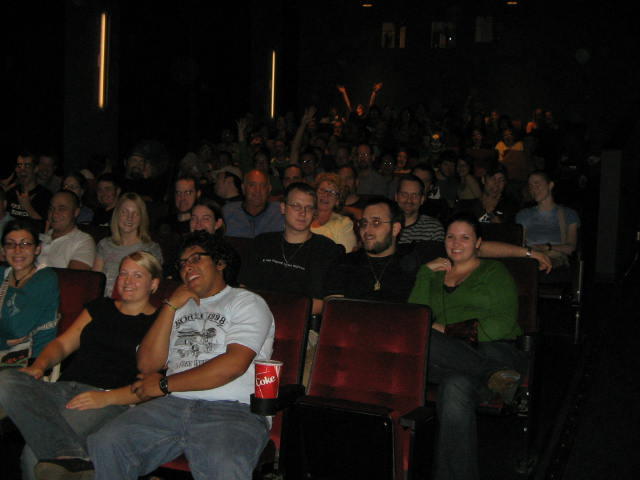
Sorry I haven't posted anything in a while but I've been busy busy busy.
The turnout to Circle Cinema's first midnighter was great! The theatre holds 105 and we drew 91 on night one; 86 on night two. I was very pleased and happy with the response. Thank you Donnie Darko!
Here's a photo of the first crowd a few minutes before the film started.
Alien is this months film if anyone wants to come lose sleep on September 30/October 1.
Subscribe to:
Posts (Atom)